

Our Relationship with Desert Vision Center

Connected Care from Evaluation to Surgery
Desert Vision Surgery works in close relationship with Desert Vision Center, an established ophthalmology practice in Rancho Mirage also led by Dr. Keith Tokuhara. This connection allows patients to move from diagnosis and consultation to surgical planning, procedure, and follow-up with a more coordinated care experience.
For patients with complex cataracts, prior eye surgery, lens complications, glaucoma, trauma, or anterior segment conditions, that continuity matters.

Two Facilities, One Connected Standard of Care
Desert Vision Center
Desert Vision Center is where many patients begin their care. The practice provides eye evaluations, diagnosis, cataract assessments, macular degeneration care, treatment planning, and post-surgical follow-up.
For patients with complicated eye histories, this first step is especially important. Prior surgery, retina conditions, glaucoma, trauma, medication use, and anatomical concerns can all affect whether surgery is recommended and how it should be planned.
Desert Vision Surgery
Desert Vision Surgery is the surgical facility created to support advanced ophthalmic procedures, including complex cataract surgery, IOL revision, secondary lens surgery, minimally invasive glaucoma surgery, anterior segment surgery, iris repair, and traumatic eye reconstruction.
The facility was designed for patients whose surgical needs may go beyond routine care. It provides a purpose-built environment where complex cases can be approached with precision, preparation, and patient comfort in mind.
A More Coordinated Experience
Because Desert Vision Center and Desert Vision Surgery are connected through Dr. Tokuhara’s clinical and surgical approach, patients benefit from a more organized experience. The team evaluating the patient’s eye health is connected to the team planning and supporting the surgical process.
That connection can help patients feel more informed, more prepared, and more confident as they move through each stage of care.
Why This Relationship Matters for Complex Cases
Complex Eye Surgery Requires Continuity
Patients with complex eye conditions often have more than one issue affecting their vision. A patient may have cataracts along with macular degeneration, prior retinal surgery, glaucoma, eye trauma, lens instability, or previous surgical complications.
In these situations, surgery is not just about addressing one isolated problem. The full eye history matters. The surgeon needs to understand the patient’s anatomy, previous procedures, current risks, visual goals, and long-term eye health.
The relationship between Desert Vision Center and Desert Vision Surgery helps keep that bigger picture connected from the first evaluation through recovery.
Fewer Gaps Between Diagnosis and Surgery
A disconnected process can create confusion for patients. They may receive an evaluation in one place, surgery somewhere else, and follow-up care in another setting.
For routine cases, that may work. For complex cases, it can leave important details vulnerable to miscommunication.
Desert Vision Center and Desert Vision Surgery are designed to support a smoother path. The patient’s diagnosis, surgical recommendation, procedure planning, and follow-up care are part of a more connected process.
A Team That Knows the Patient’s History
For complex patients, prior history can change everything. Previous retina surgery, silicone oil history, glaucoma procedures, traumatic injury, unstable lens implants, or prior cataract complications can all affect surgical planning.
A connected care model helps keep that information central. Patients are not starting over at every step. Their history, concerns, and goals remain part of the conversation before, during, and after surgery.

Built Around Dr. Keith Tokuhara’s Approach
From Consultation to Operating Room
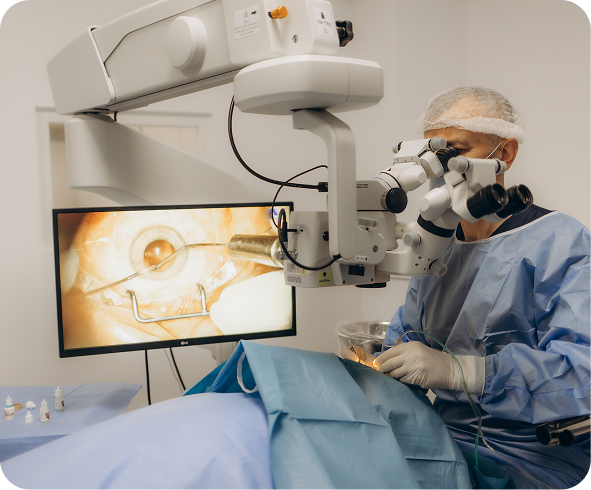
The connection between Desert Vision Center and Desert Vision Surgery reflects Dr. Keith Tokuhara’s approach to patient care: careful evaluation, honest recommendations, precise surgical planning, and long-term follow-up.
Patients deserve to understand why surgery is being recommended, what risks may exist, what alternatives may be available, and what results are realistic for their specific condition.
Retina-Informed Surgical Planning
Because Dr. Tokuhara is fellowship-trained in retina, patients with cataracts and retinal concerns may benefit from a broader view of the eye. This is especially important for patients with macular degeneration, diabetic eye disease, prior vitrectomy, retinal detachment repair, or silicone oil history.
In these cases, the cataract may be only one part of the vision problem. Surgical planning should account for the entire eye, not just the cloudy lens.
Ethical, Patient-First Care
The relationship between the clinic and surgery center is designed to support decisions based on medical need, anatomy, surgical risk, patient goals, and long-term eye health.
Complex eye surgery should not feel rushed or transactional. Patients should feel educated, respected, and supported at every step.
Connected Eye Care for Complex Surgical Needs
If you have been told your cataract surgery may be complex, need evaluation for lens repair, have prior eye surgery, or are seeking a coordinated path from diagnosis to surgery, Desert Vision Center and Desert Vision Surgery are here to help.

35900 Bob Hope Dr.,
Suite 155
Rancho Mirage, CA 92270
Fax: (760) 568-2490
Opening Fall 2026
Desert Vision Surgery is currently under development and will begin welcoming patients soon